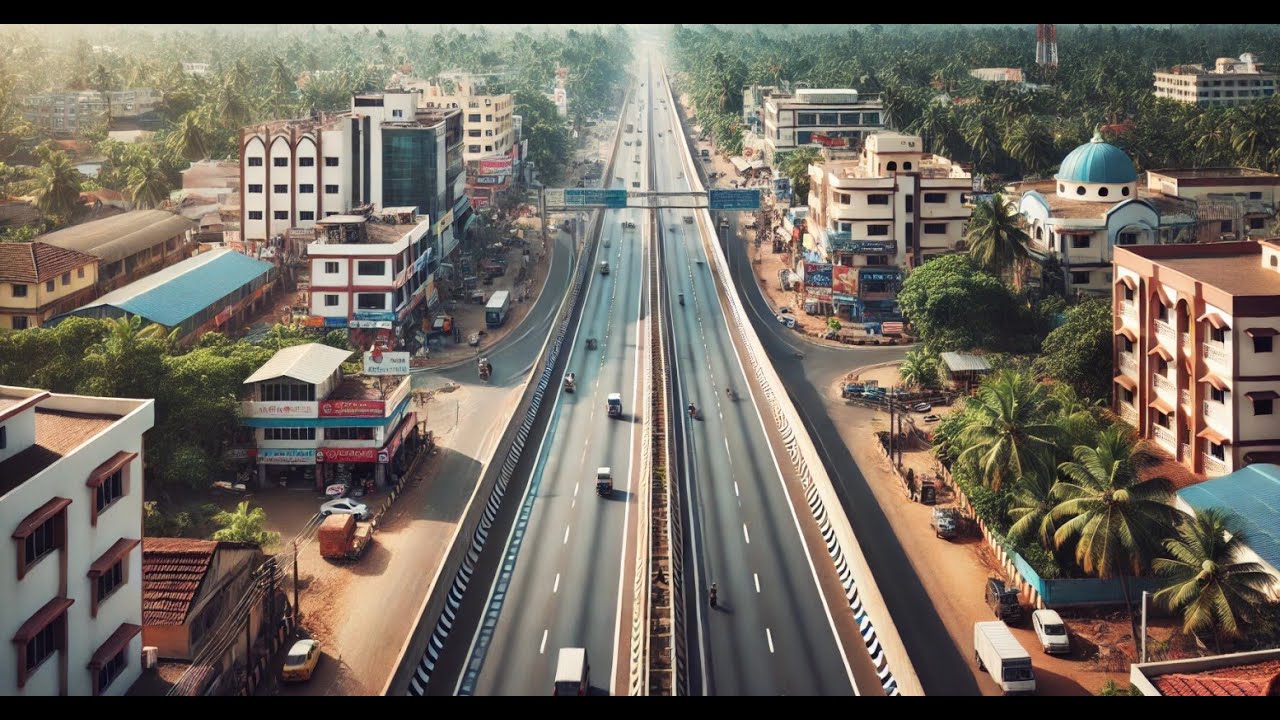
Goa, September 2026: Goa’s newly inaugurated Porvorim elevated corridor is expected to bring significant changes to travel across the state, easing one of North Goa’s most persistent traffic bottlenecks while improving connectivity for residents, tourists, logistics operators and businesses.
The 5.15-kilometre, six-lane corridor on NH66, including an elevated stretch of around 4.19 kilometres, has been developed through the densely populated Porvorim area. The project is designed to separate through-traffic from local movement and significantly improve travel between Mapusa and Panaji.
For commuters, the most immediate benefit is expected to be shorter journey times. Travel between Mapusa and Panaji, which could take around 40–45 minutes during busy periods, is expected to fall to roughly 10–15 minutes once traffic flows smoothly through the new corridor. The project is also expected to accommodate around 75,000 vehicles a day, providing additional capacity along one of Goa’s busiest routes.
A New Gateway for Goa’s Tourism Economy
The impact of the project could extend well beyond daily commuting. Porvorim serves as an important gateway towards North Goa and connects travellers moving between Panaji, Mapusa, the northern coastal belt and destinations beyond the state.
Goa Tourism Minister Rohan Khaunte has highlighted the corridor’s potential to support the next phase of tourism growth, particularly as Mopa Airport and other major transport infrastructure continue to expand. Faster road connectivity could make it easier for visitors to move between different parts of Goa and potentially encourage travellers to explore destinations beyond the state’s traditional beach circuit.
Improved connectivity is also expected to benefit hotels, restaurants and other tourism-related businesses by making the movement of visitors and supplies more efficient. Hospitality stakeholders have welcomed the project, particularly for its potential to strengthen logistics and make travel across the state more predictable.
Benefits for Residents and Businesses
For residents of Porvorim and surrounding areas, the completion of the corridor marks the end of a prolonged period of construction-related disruption. The project was built through a heavily developed urban stretch where construction had resulted in diversions, congestion and difficult daily commutes.
Businesses located along the existing surface road, however, could experience a different impact. While the completion of construction removes many of the disruptions that affected local establishments, some roadside businesses may now have to adapt to changes in traffic patterns as a large share of through-traffic moves onto the elevated corridor.
The broader economic benefits are expected to come from faster movement of people and goods. More efficient logistics can support restaurants, hotels, retailers and other businesses that depend on reliable road connectivity.
Preparing Goa for Future Growth
The Porvorim corridor is also being viewed as part of Goa’s wider infrastructure development. With increasing visitor numbers and continued investment in airports, highways and other transport links, improved road capacity will become increasingly important to the state’s tourism economy.
The project forms part of the broader Mumbai–Kanyakumari Economic Corridor, strengthening a key road connection through Goa.
At the same time, the success of the flyover will depend on how traffic is managed at its entry and exit points. Local observers have raised concerns that congestion could shift towards adjoining junctions if the connecting road network is unable to absorb the additional traffic efficiently.
For Goa, therefore, the Porvorim elevated corridor represents more than a new flyover. It is an important piece of infrastructure that could reshape everyday mobility, strengthen tourism connectivity and support economic activity provided the wider road network evolves alongside it.