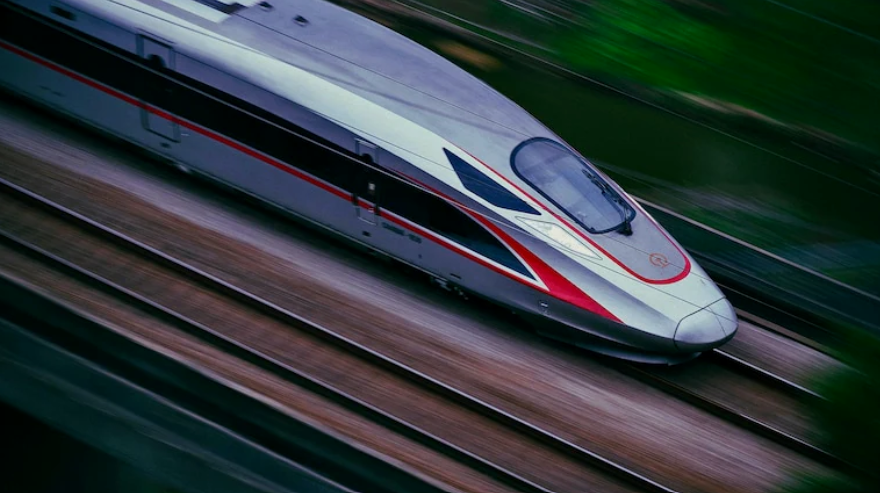
India’s Mumbai–Ahmedabad bullet train project is advancing with construction of a major underground tunnel in Maharashtra, including a 7-kilometre stretch beneath Thane Creek that will become India’s first undersea railway tunnel once completed.
The 21-kilometre underground section will connect Bandra Kurla Complex (BKC) in Mumbai with Shilphata in Thane district. Being developed by the National High Speed Rail Corporation Limited (NHSRCL), the tunnel is an important engineering component of the country’s first high-speed rail corridor.
The project combines tunnel-boring technology and conventional underground excavation methods to navigate densely populated urban areas, difficult geological formations and the creek crossing.
A 21-Km Underground Tunnel with a 7-Km Undersea Section
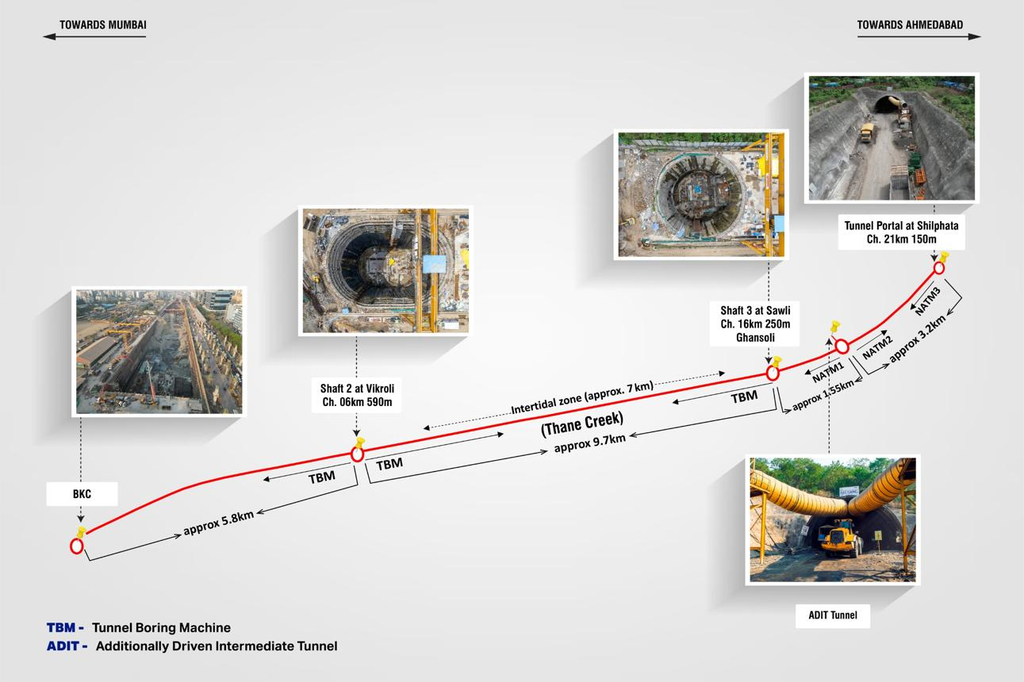
The proposed tunnel is approximately 21 kilometres long, but only around seven kilometres will pass beneath Thane Creek. The distinction is important: the entire underground section is not under the sea.
The tunnel will connect Mumbai’s BKC area with Shilphata, passing beneath parts of the Mumbai metropolitan region. Its construction is divided between two methods:
- Tunnel Boring Machines (TBMs): Approximately 16 kilometres of excavation.
- New Austrian Tunnelling Method (NATM): The remaining five kilometres.
The tunnel is designed as a single tube with a diameter of approximately 13.1 metres, accommodating both the bullet train’s up and down tracks.
The alignment also passes beneath densely developed areas, making careful engineering essential to manage underground excavation around buildings, roads, rivers and existing infrastructure.
Two Tunnel Boring Machines Drive Construction Forward
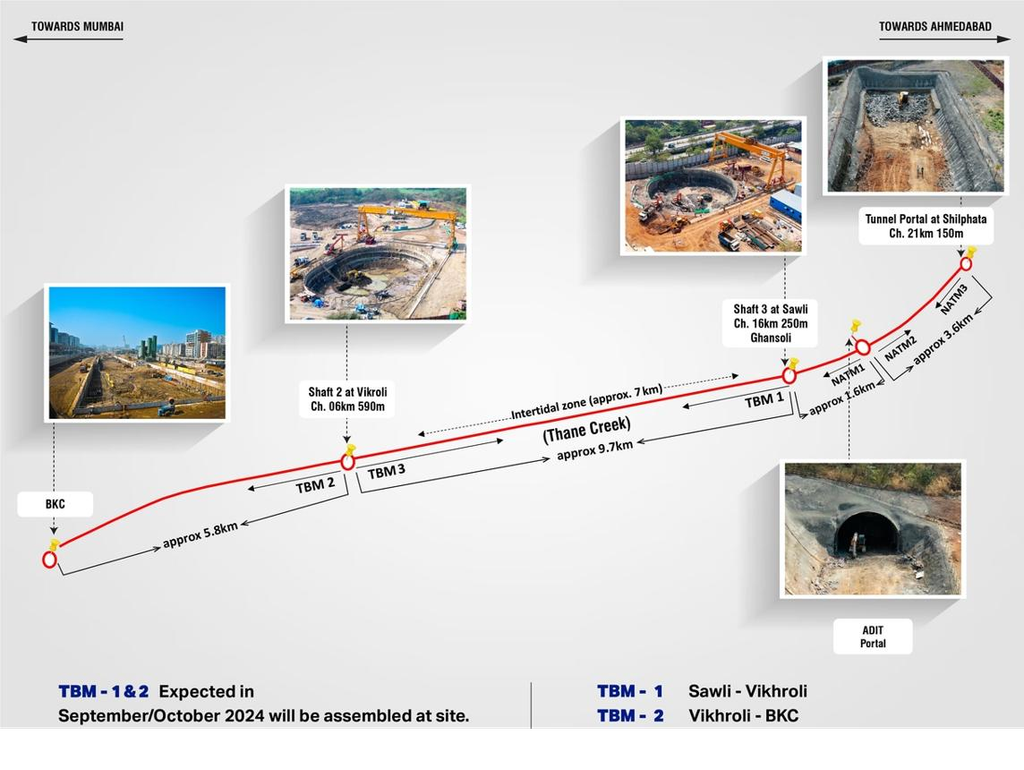
NHSRCL has deployed large tunnel-boring machines to excavate the underground section.
The first machine began its approximately six-kilometre drive from Vikhroli towards BKC on July 5, 2026. It is designed to excavate beneath built-up areas and infrastructure, including roads and the Mithi River.
A second tunnel-boring machine began work on July 18, 2026, moving from Sawli near Ghansoli towards Vikhroli. Its excavation route includes the approximately 10-kilometre stretch associated with the Thane Creek crossing, of which seven kilometres will pass beneath the creek.
These machines are designed to excavate and support the tunnel as they advance, helping engineers work through challenging underground conditions.
The NATM section has also progressed. Engineers achieved a breakthrough on a difficult 4.8-kilometre tunnel stretch between Ghansoli and Shilphata in September 2025.
How Deep Will the Undersea Tunnel Be?
The underground alignment is being constructed at varying depths. Parts of the tunnel are approximately 25 to 57 metres below ground level, depending on the location and geological conditions.
The engineering challenge is not limited to excavation depth. The project must also account for ground pressure, water conditions, soil and rock characteristics, and the existing infrastructure above the alignment.
The Thane Creek section is particularly significant because it requires construction beneath a waterway while maintaining the structural and safety requirements of a high-speed railway.
The use of large tunnel-boring machines and specialised excavation techniques is intended to support construction through these complex conditions.
Mumbai–Ahmedabad Bullet Train: Route and 12 Stations
The underground tunnel forms part of the 508-kilometre Mumbai–Ahmedabad High-Speed Rail Corridor, connecting Maharashtra, Gujarat and the Union Territory of Dadra and Nagar Haveli.
The planned route includes 12 stations:
| State or region | Stations |
|---|---|
| Maharashtra | Mumbai (BKC), Thane, Virar, Boisar |
| Gujarat | Vapi, Bilimora, Surat, Bharuch, Vadodara, Anand, Ahmedabad, Sabarmati |
The corridor is being developed using Japan’s Shinkansen high-speed rail technology, with a planned maximum operating speed of 320 kmph.
NHSRCL’s published journey estimates indicate that a limited-stop service could connect Mumbai and Ahmedabad in approximately 2 hours and 7 minutes. A service stopping at all 12 stations is expected to take longer.
Overall Project Progress Crosses 62%
The tunnel is one part of a much larger infrastructure programme involving elevated viaducts, railway stations, bridges, track systems and supporting facilities.
According to an NHSRCL response under the Right to Information Act, dated September 21, 2026, the project had achieved 62.16% overall physical progress.
The same update reported:
- Foundation work completed along approximately 459.90 kilometres.
- Piers completed along 455.10 kilometres.
- Girders cast for approximately 380 kilometres.
- Viaduct girders erected along approximately 366 kilometres.
- All required land acquired for the corridor.
These figures cover the broader high-speed rail project and should not be confused with the percentage of tunnel excavation completed.
The first high-speed trainsets are also under development. Chennai’s Integral Coach Factory has awarded BEML an order for two trainsets, with construction of the first trainset reported to have begun.
When Will India’s First Bullet Train Start Running?
The Mumbai–Ahmedabad High-Speed Rail project is expected to enter passenger operations in stages. Government project documents published in June 2026 indicated August 2027 as the projected start of the first high-speed rail service.
However, the full corridor’s completion and opening schedule remains dependent on construction, testing, trainset delivery and other operational requirements.
The undersea tunnel is a major component of the route, but its construction milestone should not be interpreted as confirmation that the entire railway line is ready to operate.
What the Tunnel Could Mean for Tourism and Connectivity
The Mumbai–Ahmedabad corridor could change travel between two of western India’s major economic and tourism centres.
Mumbai offers access to coastal attractions, cultural districts and business hubs, while Ahmedabad connects visitors to Gujarat’s heritage destinations, including the historic walled city and nearby cultural sites.
The proposed stations at Surat, Vadodara, Anand and other locations could also improve access to regional destinations and support shorter intercity journeys.
For tourism businesses, faster connections may create opportunities for weekend travel, multi-city itineraries, hospitality services and destination experiences along the corridor.
The project’s long-term impact will depend on ticket affordability, station connectivity, service frequency and the completion of the supporting infrastructure.
As excavation progresses beneath Thane Creek, the tunnel represents one of the most technically complex sections of India’s first bullet train corridor. Its completion will be an important step towards bringing high-speed rail connectivity to the Mumbai–Ahmedabad route.