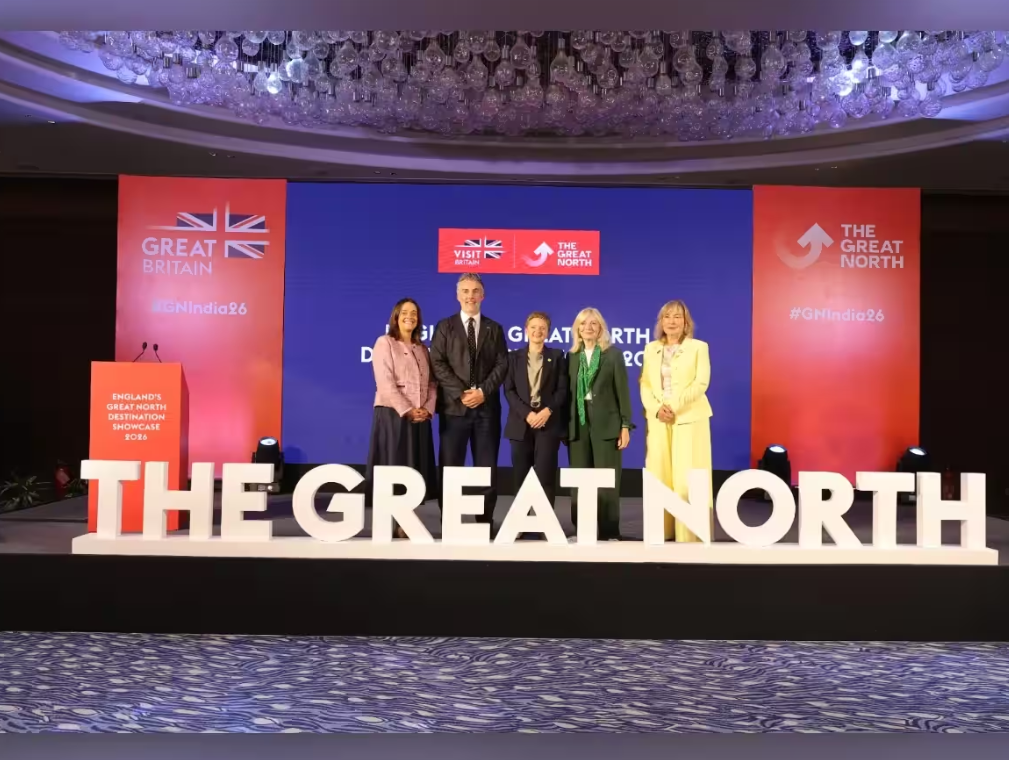
Britain is stepping up its efforts to attract Indian travellers beyond London, placing Northern England at the centre of a strategy to spread tourism spending across more destinations. VisitBritain is working with regional leaders and tourism businesses to promote the North’s cities, countryside, sporting heritage, food and screen locations to India’s travel market.
The initiative comes as India remains an important long-haul source market for Britain. VisitBritain forecasts 597,000 visits from India in 2026, generating an estimated £865 million in visitor spending. Looking further ahead, the market is projected to reach 959,000 visits and £1.5 billion in spending by 2030.
A delegation of seven mayors from the Great North has been involved in presenting the region to Indian travel stakeholders. The objective is to build stronger trade partnerships, increase destination awareness and encourage visitors to include more regional experiences in their British itineraries.
Why Northern England Is Targeting Indian Travellers
Manchester, Liverpool, Leeds and Newcastle already have some recognition among Indian audiences through football, cricket, music and popular culture. VisitBritain wants to turn that familiarity into actual visits, while introducing travellers to nearby countryside, heritage towns and coastal destinations.
The region also offers relatively straightforward connections from London. Manchester, Liverpool and Leeds are approximately two hours away by train, while Newcastle can be reached in around two and a half hours, depending on the service.
The wider proposition includes the Lake District, Yorkshire’s moors and dales, and destinations that combine historic attractions with outdoor experiences.
For visitors arriving through London, Northern England can therefore become an additional part of a longer holiday rather than a separate trip requiring extensive travel planning.
Indian Visitors Already Spend Time Beyond London
VisitBritain’s visitor data suggests that Indian travellers already have a considerable interest in exploring outside the capital. Around 56% of Indian visitor nights are spent outside London, while the average Indian visitor stays for approximately 28 nights, compared with around seven nights for the average overseas visitor.
Visiting friends and relatives is also a significant reason for travel, accounting for approximately 51% of visits from India. These family connections can help distribute tourism activity across different parts of Britain, particularly where Indian communities have established roots.
The strategy is to use these longer stays and existing connections to encourage travellers to explore additional destinations, spend more time in regional areas and discover experiences beyond traditional sightseeing.
Film, Television and Sport to Inspire Regional Travel
Screen tourism is an important part of Britain’s approach to the Indian market. Through its Starring GREAT Britain campaign, VisitBritain is using film and television locations to connect familiar stories with real destinations.
The idea is to turn the emotional connection audiences develop with films and television programmes into reasons to visit the places associated with them.
Northern England has several opportunities to benefit from this approach. Liverpool has screen connections, Manchester has represented other major cities in film and television productions, and Yorkshire’s landscapes have appeared in productions including Wuthering Heights.
VisitBritain research cited in the campaign indicates that 94% of surveyed Indian travellers are interested in visiting film and television locations during a trip to Britain.
Sport offers another route to destination promotion. Manchester’s football clubs and cricket heritage provide familiar attractions for Indian fans, while major sporting events can give travellers additional reasons to plan a visit. The 2027 Tour de France is also expected to create further opportunities to showcase destinations in the region.
Food, Nature and Experiences Beyond Traditional Sightseeing
VisitBritain is also emphasising regional food as a way to introduce travellers to the identity of individual destinations.
Local specialities such as sticky toffee pudding in the Lake District, Eccles cakes in Manchester and Wensleydale cheese in Yorkshire can become part of a wider travel experience.
Nature and wellness are also gaining attention as travellers look for alternatives to busy sightseeing schedules. The Lake District and Yorkshire countryside offer opportunities for walking, scenic exploration and slower-paced holidays.
The broader shift is towards experiences that allow visitors to connect with a destination rather than simply moving between landmarks. VisitBritain also sees growing interest among Indian travellers in smaller groups and more personalised itineraries.
Manchester Wants to Welcome 30,000 Indian Visitors
Manchester is a key part of the regional tourism strategy. Marketing Manchester Managing Director Victoria Braddock said the city currently receives around 21,000 Indian visitors annually, contributing approximately £8.7 million to the local visitor economy.
The organisation’s ambition is to increase annual Indian visitor numbers to 30,000.
Manchester is positioning itself as a gateway to the wider North, combining its industrial heritage, music, football, cricket, cultural attractions and live entertainment with access to nearby destinations.
Connectivity remains an important consideration. The city has previously had direct air services from Delhi and Mumbai, but routes and schedules have been affected by wider aviation and geopolitical conditions. Marketing Manchester is engaging with airlines, while continuing to develop relationships with Indian tour operators and travel advisers.
The city is also looking at opportunities in the meetings, incentives, conferences and exhibitions (MICE) segment. Conference facilities can be combined with distinctive local experiences, including cricket at Lancashire Cricket’s Emirates Old Trafford venue.
Weddings and Business Travel Expand the Opportunity
Beyond leisure holidays, Britain sees potential in attracting Indian weddings, business travellers and MICE groups to regional destinations.
Historic houses, castles and distinctive venues can provide settings for destination weddings, while conference infrastructure and sporting experiences can make cities such as Manchester appealing for business events.
The commercial value of this market is already significant. Indian business visitors spent a record £298 million in Britain in 2024, accounting for 38% of total visitor spending from India.
For Northern England, partnerships with Indian travel agents and tour operators will be important in converting interest into bookable itineraries. The focus is on presenting regional experiences that can be added to existing London-focused trips or sold as longer destination holidays.
Can Britain Turn Market Growth Into Regional Tourism?
Britain’s regional tourism push comes at a time when travel from India faces near-term challenges. VisitBritain has acknowledged that disruption affecting connectivity through the Middle East has slowed travel, with its 2026 forecast anticipating a 7% decline in visits from India compared with 2025. Visitor spending, however, is expected to remain broadly in line with the previous year.
The agency believes the disruption is delaying some travel rather than removing demand altogether. Longer-term projections remain positive, supported by India’s expanding middle class, growing interest in international holidays and strong family, cultural and commercial connections with Britain.
For Northern England, the challenge is to translate that potential into sustained visitor growth. By bringing together cities, countryside, sport, food, screen tourism and trade partnerships, VisitBritain and regional organisations are seeking to make the North a more prominent part of the Indian traveller’s Britain itinerary.
With the Indian visitor market forecast to generate £1.5 billion in spending by 2030, the ambition is not just to attract more visitors, but to encourage them to explore more of Britain and distribute the benefits of tourism across its regions.