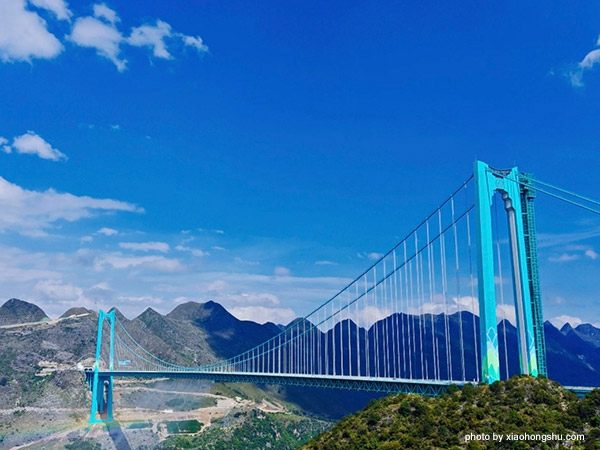
A bridge built to overcome one of China’s most challenging landscapes has become an attraction in its own right. The Huajiang Grand Canyon Bridge, located in Guizhou province in southwestern China, stands 625 metres above the Beipan River, making it the world’s highest bridge by the vertical distance between its deck and the water below.
Since opening to traffic on September 28, 2025, the turquoise suspension bridge has transformed travel across the mountainous region while attracting millions of visitors. Travellers are now visiting not only to cross the canyon but also to experience its glass observation platforms, adventurous activities and dramatic mountain views.
The bridge illustrates how major infrastructure projects can develop into tourism destinations, creating new opportunities for communities that were previously separated by difficult terrain.
Huajiang Grand Canyon Bridge: A Record-Breaking Engineering Feat
Stretching approximately 2.89 kilometres across the Huajiang Grand Canyon, the bridge has a main span of 1,420 metres. Its roadway rises 625 metres above the Beipan River, giving it the title of the world’s highest bridge.
The structure connects the mountainous areas around Zhenfeng County and Guanling Bouyei and Miao Autonomous County. Before its opening, crossing the canyon could take around two hours using the existing road network. The new bridge has reduced that journey to approximately two minutes.
Construction took more than three years and involved overcoming difficult geological conditions, strong canyon winds and the challenges of building at considerable height.
Beyond its transport function, the bridge has become a striking landmark in Guizhou’s landscape. Its enormous teal towers and suspension cables stand against steep mountains, making it particularly distinctive in photographs and aerial views.
Glass Observation Platforms and Adventure Experiences
One of the reasons the bridge has attracted so much attention is the range of visitor experiences associated with the structure.
Visitors can access glass observation platforms that provide views down into the canyon. Looking through the transparent surfaces offers a dramatic perspective of the height separating the roadway from the river below.
For adventure enthusiasts, bungee jumping is another attraction. Participants jump from a designated platform beneath the bridge, with safety equipment and staff overseeing the activity.
An exposed walkway beneath the roadway provides another way to experience the structure from a different angle. These attractions turn the bridge into more than a conventional transport route, offering visitors opportunities to experience its scale at close quarters.
Availability of individual activities can depend on operational arrangements and weather conditions. Travellers should check current visitor information before planning an activity.
More Than Three Million Visitors in Its First Year
The bridge’s popularity has extended well beyond engineering enthusiasts. By August 2026, it had attracted approximately 3.3 million visitors, according to figures shared by local officials.
The increase in visitor numbers has started changing the local business environment. Villages around the canyon have seen growing demand for accommodation, restaurants, cafés and other visitor services.
One example highlighted in the bridge’s first-year tourism coverage is a local homestay operator who expanded from nine rooms to 52 to accommodate increasing demand. The property continued to experience strong booking pressure as more travellers arrived to see the bridge.
Businesses are also using social media and livestreaming to promote local scenery and attract visitors. Improved mobile connectivity has supported this shift, with additional telecommunications infrastructure introduced to serve the growing visitor population.
For nearby communities, the bridge is therefore becoming both a transport connection and a source of tourism-related economic activity.
Exploring Guizhou Beyond the Bridge
The Huajiang Grand Canyon Bridge can also form part of a wider journey through Guizhou, a province known for its mountainous scenery, waterfalls and distinctive ethnic cultures.
Travellers can consider combining a visit with several regional attractions:
Huangguoshu Waterfall: One of China’s best-known waterfall destinations, featuring a major cascade surrounded by forested scenery and walking routes.
Longgong Scenic Area: Known for its limestone formations, caves and underground waterways, this area offers a different perspective on Guizhou’s natural landscape.
Wanfenglin: Located near Xingyi, this landscape is recognised for its clusters of limestone peaks, valleys and rural scenery. It is particularly appealing to visitors interested in photography and outdoor exploration.
Maling River Canyon: Another natural attraction in the region, featuring steep canyon walls, waterfalls and scenic walking areas.
The bridge helps connect regional attractions and supports the development of wider tourism circuits between different parts of Guizhou. Visitors planning a longer trip can explore these places alongside the canyon rather than treating the bridge as an isolated stop.
How the Bridge Is Changing Local Tourism
The Huajiang project reflects a broader shift in how infrastructure is being used to promote regional travel.
Traditionally, bridges are measured through transport benefits such as shorter journey times, improved connectivity and lower travel costs. In Guizhou, the Huajiang bridge is also creating a reason for people to visit an area they might not otherwise have considered as a holiday destination.
The increased flow of visitors is encouraging local businesses to develop accommodation, dining options and visitor services. Better connectivity is also helping rural communities reach wider markets and promote their offerings online.
However, the long-term economic benefits will depend on whether visitor demand can be sustained and whether local tourism development remains manageable.
The bridge’s growing popularity demonstrates how an infrastructure landmark can become an important part of a region’s identity. What was originally built to connect communities across a difficult canyon is now attracting travellers who want to experience the structure itself.
Planning a Visit to Huajiang Grand Canyon Bridge
Travellers interested in visiting the bridge should plan their trip around the wider Guizhou region. The attraction lies in a mountainous area, so visitors should allow enough time for road transfers and regional sightseeing.
A few practical considerations can make the journey easier:
- Check official visitor access arrangements and operating hours before travelling.
- Confirm whether glass observation platforms, bungee jumping and other activities are operating on the intended visit date.
- Keep additional time for weather-related delays, particularly during periods of rain or low visibility.
- Consider staying in nearby villages or towns to explore the surrounding region.
- Follow all safety instructions when using elevated platforms and adventure facilities.
The Huajiang Grand Canyon Bridge offers a distinctive combination of engineering, scenery and adventure tourism. Its transformation into a major visitor attraction also provides a glimpse into how infrastructure can reshape travel opportunities and create new economic possibilities for remote communities.