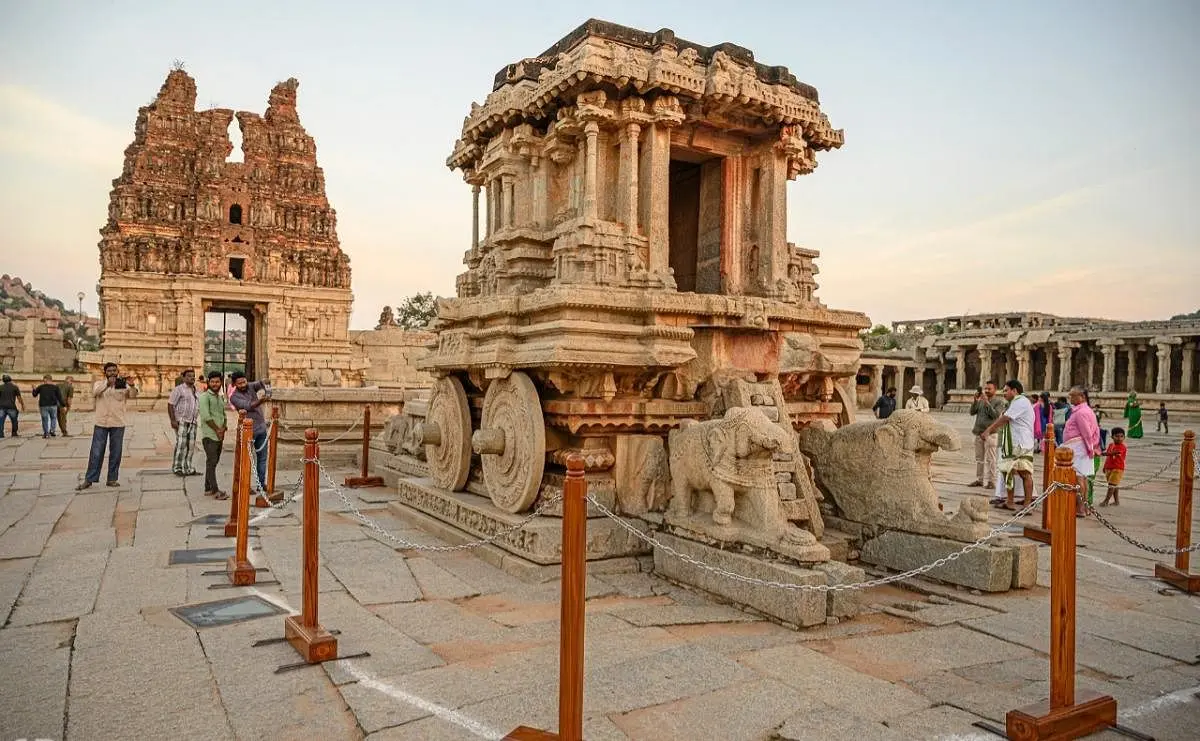
Long before modern shopping malls transformed retail, Hampi Bazaar in Karnataka served as a bustling commercial centre of the Vijayanagara Empire. Stretching along the approach to the Virupaksha Temple, this historic marketplace brought together traders, valuable goods and everyday commerce, leaving behind stone pavilions that offer a glimpse into medieval India’s thriving urban life.
Hampi Bazaar: A Commercial Hub of the Vijayanagara Empire

Located in Hampi, Hampi Bazaar was one of the prominent marketplaces of the Vijayanagara Empire, a powerful South Indian kingdom known for its architecture, trade and cultural influence.
Also known as Virupaksha Bazaar, the historic market street extends in front of the Virupaksha Temple. Rows of stone pavilions once lined the street, creating a structured commercial area where merchants could display and sell their goods.
Today, the surviving ruins reveal how trade was woven into the fabric of the city’s urban planning. Rather than existing separately from religious and civic life, the marketplace formed part of a larger setting that connected temples, public spaces and commercial activity.

Historical accounts of Vijayanagara describe a vibrant trading economy, and Hampi’s market streets were associated with a wide range of goods.
These included:
- Precious stones and jewellery: Valuable merchandise that reflected the wealth and commercial reach of the empire.
- Textiles and fine fabrics: Materials traded for everyday use as well as for affluent customers.
- Spices and other commodities: Goods that formed part of regional and wider trading networks.
- Horses: Important animals for military purposes, making the horse trade especially significant to the kingdom.
The variety of merchandise suggests that the market served different types of buyers, from people purchasing everyday necessities to wealthy patrons and traders dealing in high-value goods.
Why Hampi Bazaar Was Like a Medieval Shopping Mall
The comparison with a modern shopping mall is not literal, but it helps explain the marketplace’s role in the city.
Hampi Bazaar was a dedicated commercial street, with stone pavilions arranged along a major route near an important temple. Merchants could conduct business in a concentrated area, while the surrounding urban centre brought together religious, residential and commercial functions.
Its scale and organisation offer a useful reminder that shopping districts and specialised trading areas existed in India long before contemporary retail complexes.
However, the marketplace was fundamentally different from a modern mall. It was part of a historic city shaped by the economy, social structure and religious life of the Vijayanagara period.
What Can Travellers See at Hampi Bazaar Today?

Although the market no longer operates as it once did, visitors can still walk along the historic street and see the remains of its stone pavilions.
The bazaar stretches from the vicinity of Virupaksha Temple towards the large monolithic Nandi statue. The surviving structures provide a sense of the street’s layout and its former importance as a commercial centre.
Travellers can combine a walk through the bazaar with visits to nearby temple complexes and other monuments across Hampi. The wider archaeological landscape reveals the scale of the Vijayanagara capital and its distinctive architectural heritage.
Planning a Visit to Hampi
Hampi is a compelling destination for travellers interested in Indian history, architecture and heritage tourism. Visitors can explore its temple complexes, historic streets, stone monuments and distinctive rocky landscape over a multi-day trip.
A few practical considerations can make the visit easier:
- Allow enough time: Hampi’s historic attractions are spread across a wider landscape, so avoid rushing through the major sites.
- Wear comfortable footwear: Exploring the ruins often involves walking over uneven surfaces.
- Start early: Morning visits can be more comfortable, particularly during warmer months.
- Respect the heritage site: Avoid climbing fragile structures, damaging stonework or leaving litter.
- Check local arrangements: Confirm opening hours, entry rules and transport options before travelling.
Final Thoughts
Hampi Bazaar is more than a street of ancient ruins. It offers a window into the commercial life of one of medieval India’s most influential empires, when traders, valuable goods and urban infrastructure helped shape a thriving capital.
For travellers, the surviving pavilions provide an opportunity to explore the connection between trade, architecture and daily life in the Vijayanagara era. The comparison with a modern shopping mall may be striking, but the real fascination lies in discovering how sophisticated and organised historic marketplaces could be.