
Amaravati, Andhra Pradesh’s capital city, is set to become home to a major railway infrastructure project designed around the scale and facilities of a modern airport. The proposed Amaravati Railway Station is expected to feature 24 platforms, four passenger terminals and facilities planned to handle more than three lakh passengers daily.
Estimated at ₹2,245 crore, the project is part of a wider effort to connect Amaravati to India’s railway network and strengthen transport links across southern India. It also includes a new railway line and a major bridge across the Krishna River.
The proposed development is intended to serve the city’s long-term transport needs while supporting its emergence as a major administrative, commercial and urban centre.
Amaravati Railway Station: 24 Platforms and Four Terminals

The proposed station is planned across a large development area of approximately 1,500 acres, with 24 high-tech platforms and four passenger terminals.
Its airport-inspired design is expected to include:
- Dedicated passenger waiting lounges
- Digital ticketing and automated entry systems
- Automatic ticket vending machines
- Multilingual online ticketing facilities
- High-speed Wi-Fi connectivity
- Laptop charging points and work-friendly spaces
- Advanced ventilation and air-quality monitoring
- Central air-conditioning and modern passenger amenities
The station is being planned with a long-term outlook of 40–50 years. Its projected daily passenger-handling capacity is more than three lakh, although actual traffic will depend on future train services, connectivity and regional development.
₹2,245-Crore Project Includes a 57-Km Railway Line

The railway station is part of a broader connectivity project involving a new 57-kilometre broad-gauge railway line between Errupalem, Amaravati and Namburu.
The route is intended to bring Amaravati directly onto the railway map and connect it with existing railway corridors.
A major engineering component is a proposed 3.2-kilometre railway bridge across the Krishna River. The bridge will form an important section of the new line and help establish rail access to the capital region.
The Union Cabinet approved the Errupalem–Amaravati–Namburu railway line in October 2024. Official parliamentary information subsequently listed the project at ₹2,047 crore, while the broader project announcement and current reports have cited ₹2,245 crore. The cost figures should therefore be distinguished rather than treated as identical.
Proposed Bullet Train Connectivity to Hyderabad, Chennai and Bengaluru

One of the most ambitious aspects of the proposed transport hub is its planned integration with future high-speed rail connectivity.
The proposed Hyderabad–Chennai and Hyderabad–Bengaluru bullet train routes have been described as passing through Amaravati, potentially positioning the city as an important rail interchange.
Projected journey times highlighted in the development plan include:
| Destination | Proposed journey time |
|---|---|
| Hyderabad | 70 minutes |
| Chennai | 112 minutes |
| Bengaluru | 2 hours |
These are proposed travel-time estimates, not currently available train services or confirmed operating schedules. Their delivery will depend on the approval, funding and construction of the relevant high-speed rail infrastructure.
The new conventional railway line is also expected to improve connectivity with other parts of India through links to existing rail corridors.
Smart Infrastructure and Safety Features
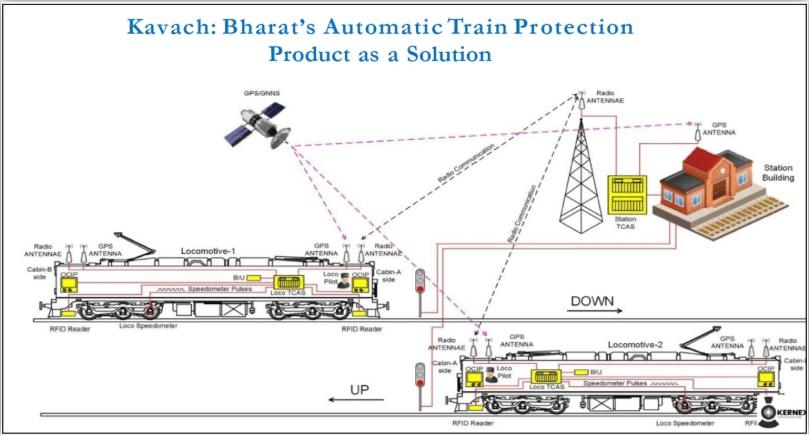
The proposed Amaravati railway corridor is being designed with several technology-led features intended to improve railway operations and passenger safety.
One of these is Kavach, India’s automatic train protection system, which is designed to help prevent train collisions under specified operating conditions.
The track alignment is also being developed to minimise unnecessary curves, supporting smoother train movement and the potential for higher operating speeds.
Given the proximity of the railway corridor and bridge to the Krishna River, flood-risk planning is another important component. The project design is reported to use historical flood data covering approximately 100 years to guide protective measures.
High-resolution satellite data is also being used in the route-planning process.
Solar Power and Sustainable Station Design

The proposed station will incorporate renewable energy and energy-efficient systems as part of its infrastructure planning.
Solar panels are planned for sections of the station roof, platform walls and parking areas. The objective is to meet a substantial share of the station’s electricity requirements through on-site generation.
Other planned features include LED lighting, efficient ceiling fans and central air-conditioning systems.
The wider railway corridor is also associated with environmental planning measures, including efforts to minimise impacts on the Kondapalli forest region.
How the Project Could Transform Amaravati

The railway station is one component of Amaravati’s larger urban development programme. Improved rail access could make the city more accessible for government employees, students, business travellers and tourists.
The project is also expected to support regional economic activity by improving passenger movement and connecting the capital region with wider commercial networks.
A proposed multimodal cargo terminal at Paritala, linked to National Highway 65 and the wider railway network, could further strengthen freight movement and logistics connectivity.
For travellers, the most significant potential benefit will be easier access to Amaravati and nearby destinations, including Vijayawada and Guntur.
When Will Amaravati Railway Station Be Ready?
The proposed railway station project is targeted for completion within approximately two to three years, according to current project reporting.
Land acquisition and other preparatory work are progressing, with approximately 80% of the required railway land in the Andhra Pradesh capital region reported as identified or acquired by the relevant authorities.
However, the station and associated railway infrastructure are still under development. The proposed passenger capacity, high-speed connectivity and facilities should be viewed as project plans rather than operational services.
Once completed, Amaravati’s railway hub could become a major addition to India’s transport infrastructure, combining conventional rail connectivity with airport-inspired passenger facilities and plans for future high-speed services.


