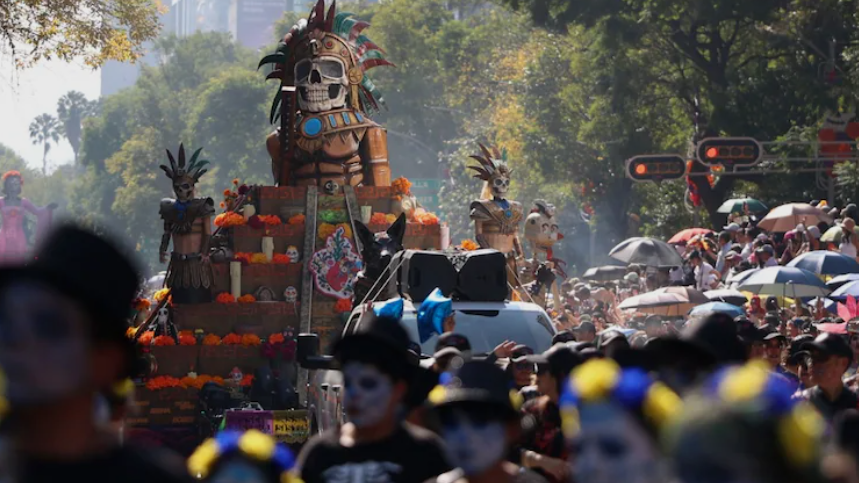
Mexico City’s annual Day of the Dead parade has an unusual origin story: one of its biggest inspirations came from a fictional scene in a James Bond film. What appeared on screen in the 2015 movie Spectre as a spectacular procession through the Mexican capital did not exist in that form at the time. The cinematic idea helped inspire city authorities to create a real parade, which has since become a major part of the capital’s October and November festivities.
The Gran Desfile de Día de Muertos celebrated its 10th anniversary on October 31, 2026. Thousands of performers, giant skeleton figures, elaborate floats, musicians and dancers filled the streets, bringing the spectacle to the heart of Mexico City.
The procession was part of a wider Day of the Dead programme, which combines public celebrations with a much older tradition of remembering deceased family members.
From the James Bond Film Spectre to a Real Parade

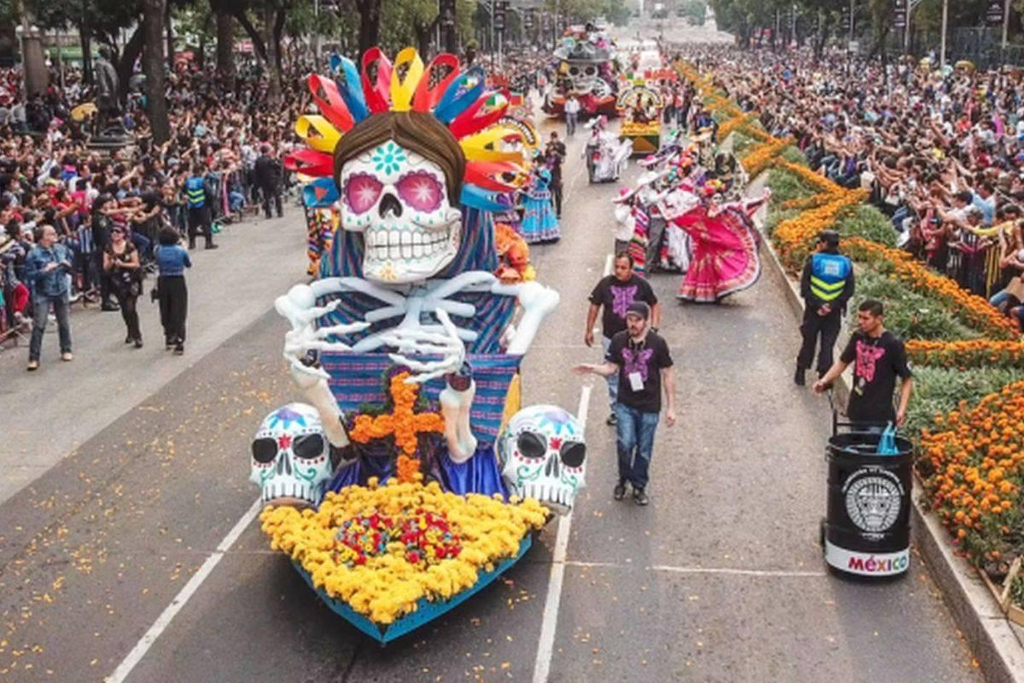
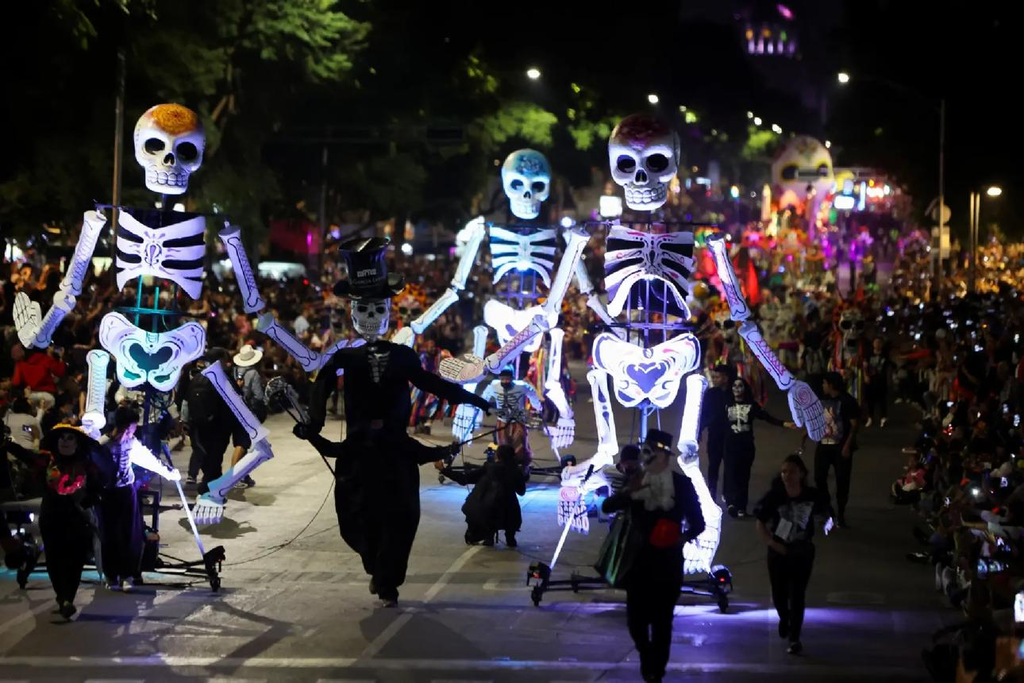
The parade’s story begins with Spectre, the 24th James Bond film, released in 2015. Its opening sequence features Daniel Craig’s Bond walking through a crowded Day of the Dead procession in Mexico City’s historic centre, surrounded by people in elaborate skeleton costumes.
The scene presented an impressive image of the Mexican capital to international audiences. However, the large-scale parade depicted in the film was not an established annual public event.
Following the film’s release, Mexico City organised its first major parade in 2016. Some of the giant figures created for the film also appeared in the inaugural procession.
The event quickly attracted public interest. Former Mexico City mayor Miguel Ángel Mancera, who was involved in organising the first parade, recalled that residents began asking when the procession would return. What began as an initiative influenced by cinema gradually developed into an annual fixture.
The 2026 edition marked a decade of the parade, demonstrating how a fictional cinematic scene became part of the city’s contemporary cultural calendar.
What Happened at the 2026 Parade?
The 10th-anniversary procession took place on Saturday, October 31, 2026, beginning at 2 PM from the Diana Cazadora roundabout on Paseo de la Reforma and continuing towards the Zócalo, Mexico City’s central square.
The programme brought together more than 4,000 participants, 12 decorated floats and two monumental balloons. Marching groups, musicians, acrobats and performers wearing elaborate masks and feathered headdresses added to the procession.
The floats and performances also paid tribute to prominent figures from Mexican culture, including:
- Juan Gabriel, the celebrated singer and songwriter.
- Juan Rulfo, the influential Mexican writer.
- Nellie Campobello, the author and dancer.
- Emilio “El Indio” Fernández, the filmmaker and actor.
The procession also featured references to Mexican wrestling and a special UNICEF contingent.
City officials expected more than 500,000 visitors during the parade and Formula One Grand Prix weekend, which coincided with the festivities. The overlap added to the city’s visitor activity during one of its busiest cultural and sporting periods.
The Tradition Behind Día de Muertos

Although the parade is relatively new, Día de Muertos, or Day of the Dead, has deep cultural roots in Mexico. The observance brings together pre-Hispanic beliefs and traditions that developed after the Spanish conquest, incorporating elements of Catholic celebrations associated with All Saints’ Day and All Souls’ Day.
The central idea is remembrance. Families honour deceased relatives by creating ofrendas (altars) in their homes, placing photographs, candles, food, drinks and personal belongings associated with loved ones.
Several symbols are closely associated with the celebration:
- Cempasúchil: Bright orange marigolds traditionally used to decorate altars and create paths believed to guide the spirits of the departed.
- Catrinas: Elegant female skeleton figures popularised through Mexican visual art and now widely associated with Day of the Dead imagery.
- Pan de muerto: A traditional sweet bread prepared for the occasion.
- Candles and photographs: Personal elements placed on family altars in memory of those who have died.
November 1 and 2 are particularly important dates, with families gathering, visiting cemeteries and maintaining traditions that connect generations.
The parade is one public expression of the wider celebration, but it is not the original or defining ritual of Día de Muertos.
The Giant Catrina and Celebrations at the Zócalo
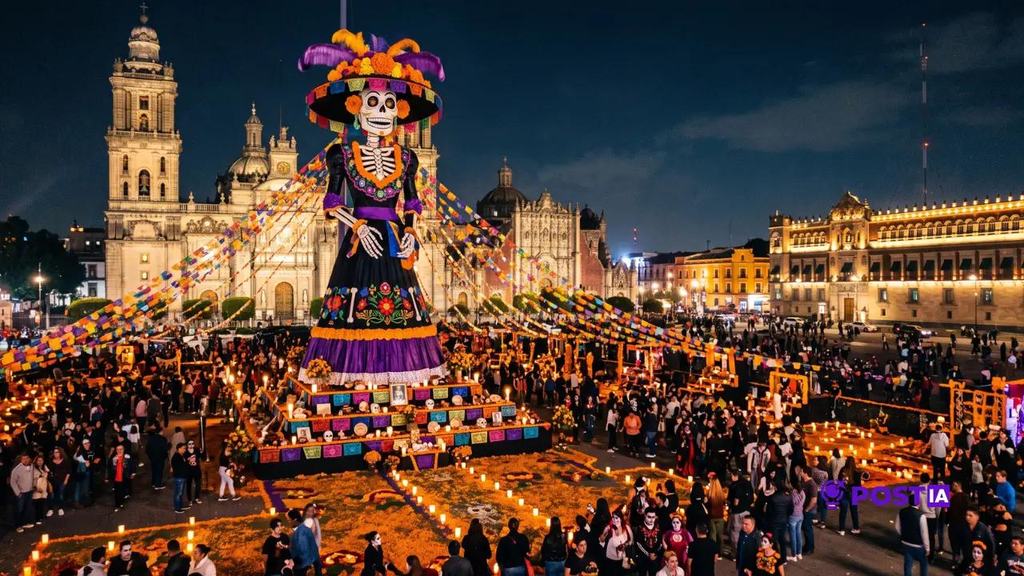
The Zócalo remained a major focal point of the 2026 festivities. This year’s celebrations featured an enormous Catrina sculpture, standing approximately 11 storeys tall, alongside the city’s monumental offering and seasonal decorations.
The installation brought together traditional imagery and large-scale public art, attracting visitors to the historic square.
Other parts of the city also hosted flower exhibitions, illuminated installations, community altars and cultural performances. These activities offered a wider view of the festival beyond the main parade route.
When Tourism and Tradition Meet
The growing popularity of Mexico City’s parade reflects the influence that film, popular culture and international tourism can have on a destination’s identity.
For the city, the procession has become an important attraction, drawing residents and overseas visitors to its historic centre. Its timing alongside the Formula One Grand Prix also adds to the city’s appeal as a destination for travellers seeking multiple cultural and entertainment experiences.
However, the increasing visibility of Day of the Dead celebrations has also raised questions about the relationship between tourism and local traditions. The Associated Press reported concerns about overcrowding in some Mexican communities, where visitors can place pressure on cemeteries and spaces traditionally reserved for families.
The parade itself is a modern public event, while the underlying Day of the Dead observance remains rooted in family remembrance and community practices.
For travellers, understanding this distinction matters. Experiencing the procession and visiting public installations can offer an introduction to Mexican culture, but respecting family spaces, local customs and community access is equally important.
Mexico City’s Day of the Dead: More Than a Parade
The 2026 procession demonstrated how a film-inspired event can develop into a significant cultural attraction. Ten years after its first edition, the Mexico City parade has become a recognisable part of the capital’s annual festival calendar.
Yet its significance extends beyond giant floats, costumes and crowds. The wider Day of the Dead observance continues to centre on memory, family and the relationship between the living and those who have passed away.
For international visitors, Mexico City offers an opportunity to experience both sides of the celebration: the large public spectacle and the quieter traditions that give the occasion its meaning.