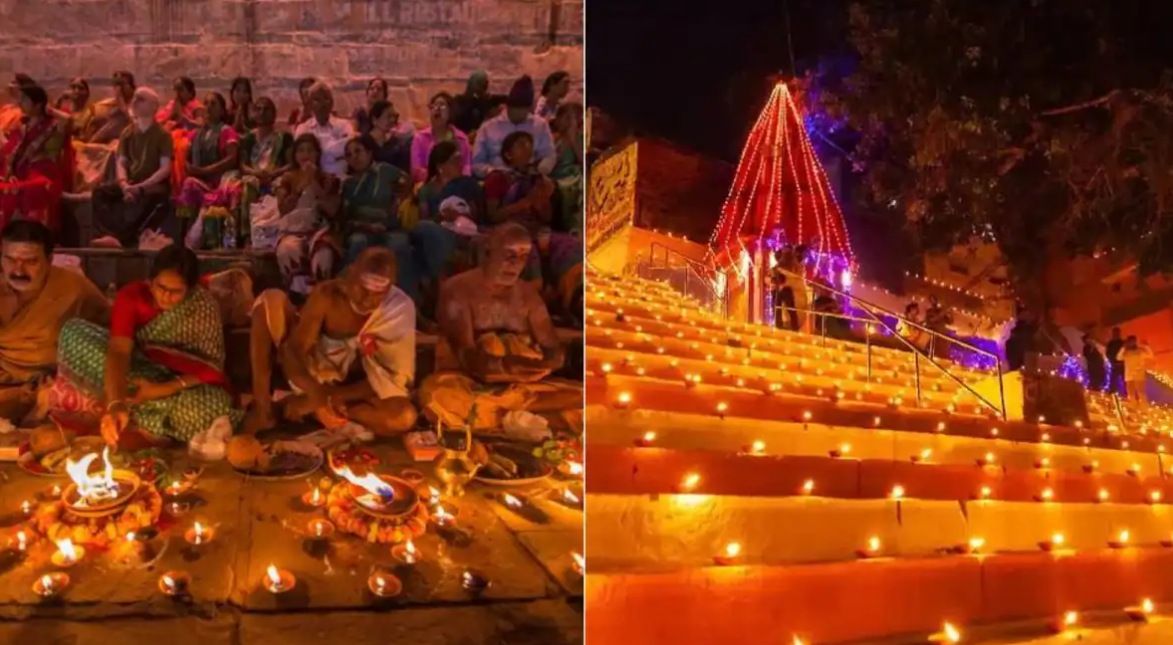
Varanasi is preparing to celebrate Dev Deepawali on November 24, 2026, when the city’s historic ghats along the Ganga will glow with thousands of earthen lamps. Observed on Kartik Purnima, the festival is often described as the “Diwali of the Gods” and is among the most visually striking cultural and religious celebrations in Uttar Pradesh.
For first-time visitors, Dev Deepawali offers an opportunity to experience Varanasi’s spiritual traditions, riverside ceremonies, illuminated architecture and cultural heritage in one evening. However, the scale of the celebrations also makes advance planning essential.
What Is Dev Deepawali and Why Is It Celebrated?
Dev Deepawali falls on the full-moon night of Kartik Purnima, approximately 15 days after Diwali. According to Hindu belief, the gods descend to Earth on this night to bathe in the sacred Ganga.
The festival is also associated with Lord Shiva’s victory over the demon Tripurasura. Devotees celebrate the occasion by lighting diyas, offering prayers and participating in religious ceremonies along the riverfront.
Unlike the nationwide Diwali celebrations, Dev Deepawali is particularly associated with Varanasi, where the ghats become the centre of the festivities.
When Is Dev Deepawali 2026?
Dev Deepawali will be celebrated on Tuesday, November 24, 2026, coinciding with Kartik Purnima.
The celebrations traditionally take place in the evening, when earthen lamps illuminate the riverfront. Visitors should check local announcements closer to the festival for confirmed timings of the Ganga Aarti, cultural programmes, traffic restrictions and other arrangements.
What Can First-Time Visitors Expect?


The illuminated ghats: The main attraction is the spectacular display of earthen lamps across Varanasi’s riverfront. From Assi Ghat to Raj Ghat, the illuminated steps and temples create a striking view after sunset.
The Ganga Aarti: Religious ceremonies and special Ganga Aarti programmes draw large crowds. Dashashwamedh Ghat is among the best-known locations for witnessing the ritual.
Cultural performances: Dev Deepawali is also an occasion for music, traditional performances and cultural programmes celebrating the heritage of Kashi.
The riverfront atmosphere: The reflection of thousands of lamps on the Ganga, combined with devotional chants and temple bells, creates the festival’s distinctive atmosphere.
Best Places to Experience Dev Deepawali


- Dashashwamedh Ghat: A major gathering point for the Ganga Aarti and festival atmosphere.
- Assi Ghat: Popular for its riverside setting and religious activities.
- Chet Singh Ghat: A historic riverfront location that has hosted special light and projection displays during previous celebrations.
- Raj Ghat: An important northern stretch of the riverfront and a venue for Ganga Mahotsav programmes in 2026.
Should You Watch the Festival From a Boat?

A boat ride on the Ganga can offer a panoramic view of the illuminated riverfront, allowing visitors to see several ghats from the water.
However, boats can be in high demand during the festival, and river traffic may be regulated. Visitors should:
- Book through authorised operators and confirm the boarding point.
- Check the permitted sailing timings and applicable safety instructions.
- Wear a life jacket throughout the ride.
- Avoid unlicensed operators and overcrowded boats.
Those who prefer to remain on land can experience the celebrations from designated public viewing areas, subject to crowd-management arrangements.
Travel Tips for First-Time Visitors
1. Book accommodation early
Hotels and guesthouses in Varanasi can experience high demand around Dev Deepawali. Booking in advance is advisable, particularly for properties near the old city and riverfront.
2. Arrive well before sunset
The ghats become increasingly crowded as evening approaches. Plan to reach your chosen viewing area early and allow extra time for walking.
3. Prepare for traffic restrictions
Road closures and diversions are likely around major ghats and central Varanasi. Follow local police instructions and be prepared to cover the final distance on foot.
4. Wear comfortable footwear
Visitors may need to walk through narrow lanes, uneven pathways and crowded steps. Comfortable footwear is more practical than formal shoes.
5. Respect local customs
Dress appropriately when visiting temples and religious sites. Avoid disturbing prayer ceremonies, and ask permission before photographing individuals participating in rituals.
6. Keep the riverfront clean
Use designated waste bins and avoid leaving plastic, food packaging or other waste along the ghats.
Ganga Mahotsav: Another Reason to Visit
The celebrations are preceded by Ganga Mahotsav, a cultural festival scheduled from November 20 to 23, 2026. The main programme is planned at Raj Ghat, with additional activities at Namo Ghat and Raj Ghat.
The event showcases Varanasi’s cultural traditions through performances and activities involving local artists. Travellers planning a longer visit can consider arriving before November 24 to experience both events.
How to Reach Varanasi
Varanasi is accessible by air, rail and road.
- By air: Lal Bahadur Shastri International Airport connects Varanasi with several Indian cities.
- By train: Varanasi Junction and Banaras railway stations serve passengers travelling from different parts of India.
- By road: The city is connected to major destinations in Uttar Pradesh and neighbouring states through national and state highways.
For festival travel, visitors should allow additional time for transfers because traffic restrictions and congestion may affect access to hotels and the riverfront.
A Festival That Brings Varanasi’s Heritage to Life
Dev Deepawali is more than an illuminated riverfront. It brings together religious traditions, local communities, music, architecture and the cultural identity of Varanasi.
For first-time visitors, the experience offers a chance to witness the city at one of its most significant annual celebrations. Planning accommodation, transport and viewing arrangements in advance can make the visit more comfortable while allowing travellers to appreciate the festival’s atmosphere.