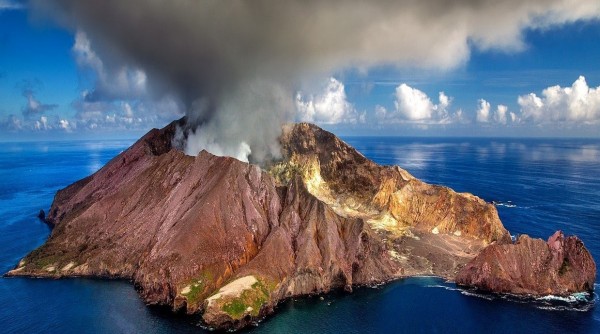
A remote volcanic island in the Andaman Sea is attracting attention after a pilot shared how travellers flying over the region might catch a glimpse of one of India’s most extraordinary natural wonders.
India is known for its mountains, beaches, forests and deserts, but hidden in the Andaman Sea is a geological wonder that many travellers may never have heard of: Barren Island.
Located approximately 138 kilometres northeast of Sri Vijaya Puram, formerly Port Blair, Barren Island is home to India’s only confirmed active volcano.
The remote island recently attracted attention on social media after pilot and content creator Chidambaram Meyappan shared an interesting observation about the volcano. According to him, passengers flying over the Andaman region on certain routes may occasionally spot the island and its volcanic activity from their aircraft.
The revelation has sparked curiosity about a destination that remains largely inaccessible to conventional tourists but offers one of India’s most remarkable natural spectacles.
A Volcano Rising From the Andaman Sea


7
Surrounded by the blue waters of the Andaman Sea, Barren Island presents a dramatic landscape shaped by centuries of volcanic activity.
The island’s volcanic summit rises approximately 354 metres, or 1,160 feet, above sea level. Its dark rocky slopes and volcanic deposits create a striking contrast with the surrounding ocean.
Much of the volcanic structure extends beneath the sea, making the visible island only part of a much larger geological formation.
Unlike the densely vegetated islands that make up much of the Andaman archipelago, Barren Island features rugged volcanic terrain, ash-covered surfaces and limited vegetation.
Its isolated location and unusual landscape have made it an important site for geological research.
The History of India’s Only Active Volcano
Barren Island’s first recorded eruption dates to 1787.
After a long period of relative dormancy, the volcano erupted again in 1991, marking a significant chapter in its modern geological history.
Since then, it has experienced intermittent volcanic activity, including eruptions and ash emissions in subsequent decades.
Records of more recent activity extend into January 2026, demonstrating that the volcano remains geologically active.
However, an active volcano does not necessarily erupt continuously. Its visible activity can change, and travellers should not assume that smoke, ash or lava will be present during a particular visit.
Barren Island is also considered South Asia’s only historically active volcano, making it an important natural landmark beyond India’s borders.
A Pilot’s Video Brings Barren Island Into the Spotlight
The island recently gained renewed attention after pilot and content creator Chidambaram Meyappan discussed it in an Instagram video.
While flying towards Bangkok, Meyappan explained that passengers travelling along certain routes over the Andaman Sea might be able to identify the volcanic island from the air.
He described how a small island surrounded by water could occasionally be seen with smoke rising from its volcanic crater.
His video also highlighted the island’s history, volcanic structure and surprising wildlife.
Social media users responded with admiration for the region’s natural beauty, with several expressing pride in India’s geographical diversity.
The video introduced many viewers to a destination that is rarely included in conventional Andaman travel itineraries.
Why Barren Island Is Not Entirely Barren
Despite its name and harsh volcanic environment, Barren Island supports some wildlife.
Wild goats have survived on the island for generations, while fruit bats and other species have also been recorded in the area.
According to the account shared by Meyappan, goats were introduced to the island by British sailors during the 1890s.
Their survival in such an isolated and challenging environment has become one of the island’s intriguing ecological stories.
The surrounding waters also support marine ecosystems, including coral reefs and fish species.
This contrast between volcanic terrain and underwater biodiversity makes Barren Island particularly interesting to researchers and experienced marine explorers.
Can Tourists Visit Barren Island?
Although Barren Island is an extraordinary natural attraction, tourism access is restricted because of its volcanic activity and remote location.
Visitors are generally not permitted to land on the island.
However, authorised boat excursions may allow travellers to view the volcanic landscape from the surrounding waters.
Some specialised diving trips also operate in the wider region, including excursions associated with Swaraj Dweep.
The waters around Barren Island are known for volcanic underwater landscapes, dark sand and marine biodiversity.
Travellers considering such excursions should confirm current permissions, operator authorisations, weather conditions and safety requirements before planning a visit.
Narcondam Island: Barren Island’s Volcanic Neighbour
Barren Island is not the only volcanic landform in the Andaman region.
Another remote island, Narcondam Island, lies approximately 140 kilometres to its north.
Unlike Barren Island, Narcondam is not considered an active volcano in the modern historical record.
It is known for its forested landscape and distinctive biodiversity, including the rare Narcondam hornbill.
Together, the two islands provide valuable insights into the geological and ecological history of the Andaman region.
A Rare Natural Wonder Worth Knowing About
Barren Island offers a reminder that some of India’s most fascinating landscapes remain far beyond the country’s familiar tourist destinations.
Its volcanic history, remote location and unusual wildlife make it an important part of the Andaman and Nicobar Islands’ natural heritage.
For travellers flying over the region, catching a glimpse of the island would be a rare experience, although visibility depends on the aircraft’s route, weather and viewing conditions.
For those exploring the Andamans by sea, authorised excursions offer another way to appreciate this extraordinary volcanic landscape from a safe distance.
Whether viewed from an aircraft or the surrounding ocean, Barren Island remains one of India’s most remarkable geological landmarks.