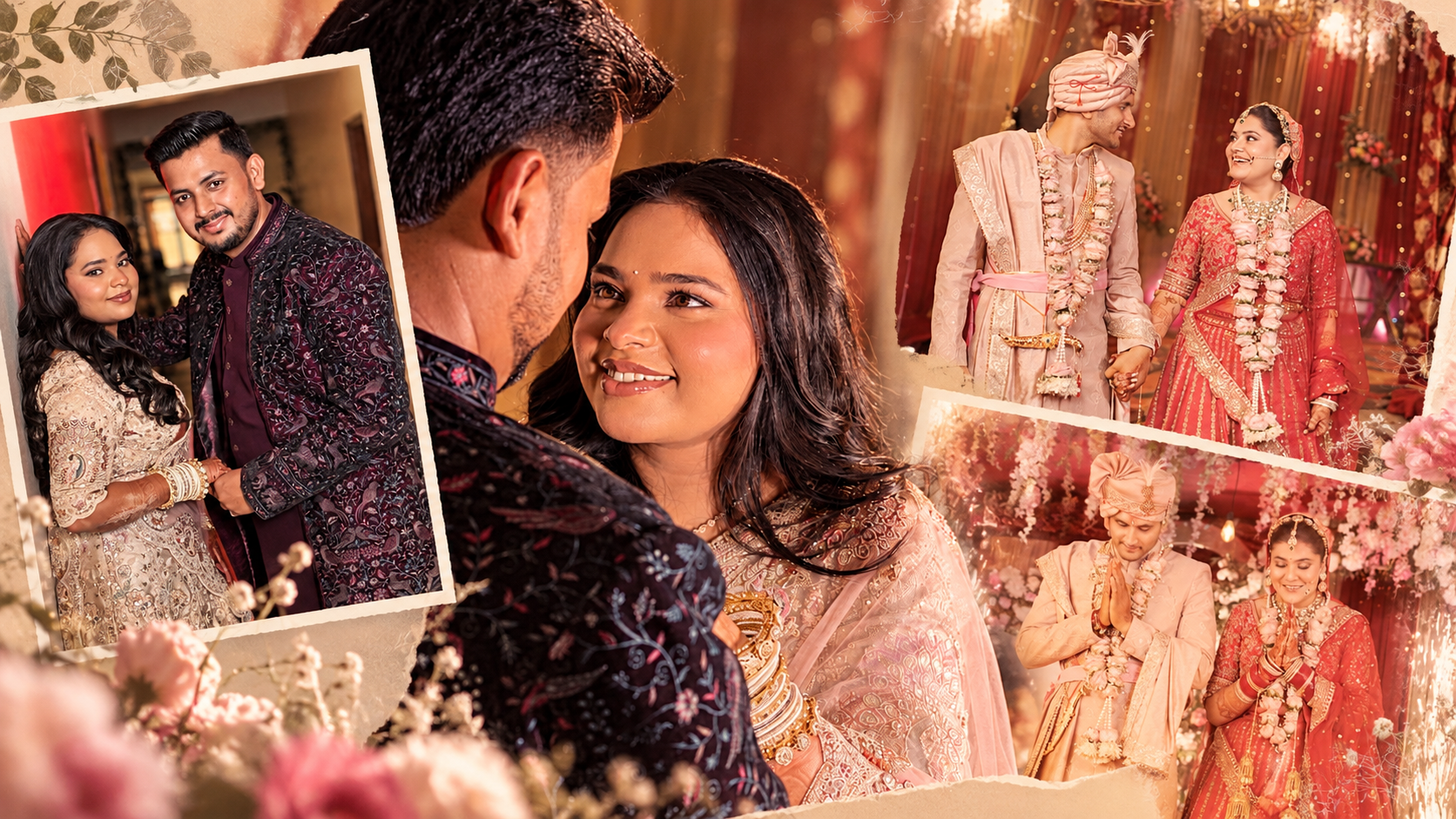
From fleeting glances and behind-the-scenes moments to vertical videos that reach millions, wedding storytelling is evolving beyond traditional photography. The shift reflects a growing desire to capture not just how a celebration looked, but how it felt.
A wedding is made up of moments that rarely follow a script. A couple exchanging a glance across the room, a parent holding back tears, friends laughing between ceremonies or a quiet interaction away from the crowd — these are often the memories that remain long after the music stops and the decorations come down.
For generations, wedding photography and videography have helped preserve these occasions. Carefully composed portraits, cinematic films and wedding albums remain an important part of the experience. But the way couples document and revisit their celebrations is changing.
Increasingly, wedding stories are being told through short-form videos, candid footage and content created in real time. The emphasis is shifting from documenting only the main events to capturing the atmosphere, relationships and spontaneous interactions surrounding them.
This is where wedding content creation has found its place — not as a replacement for traditional photography or videography, but as another way of experiencing and remembering a celebration.
The Rise of the Unscripted Moment
Traditional wedding photography often involves planning, composition, lighting and carefully timed portraits. Wedding content creation works alongside this process, paying attention to the moments that emerge between scheduled events.
The distinction is not simply about whether a photograph is candid or posed. It is also about how a story is captured, edited and experienced afterwards.
A short video can bring together reactions, snippets of conversation, movement, music and the atmosphere of a venue. A collection of vertical clips can document the progression of an entire celebration, from preparations and family interactions to the energy of the dance floor.
These moments do not necessarily require elaborate staging. Their appeal often lies in their familiarity and spontaneity.
For couples, such content offers a more immediate way to revisit their celebrations. For friends and family, it provides a glimpse of moments they may have missed while attending the event themselves.
The growing popularity of this format also reflects a broader change in how people consume visual stories. Short-form video has become a familiar part of everyday digital life, making it natural for personal milestones to find expression in the same format.
Why Vertical Video Has Found a Place at Weddings
The popularity of Instagram Reels and other short-form video formats has influenced how wedding memories are created and shared.
Designed for mobile screens, vertical videos are easy to watch, revisit and distribute. A carefully captured moment can reach a couple’s immediate circle and, sometimes, a much wider audience.
However, reach alone does not determine the value of wedding content. A video watched by millions may become a memorable social media moment, while a simple clip viewed only by family members may hold far greater personal significance.
The more interesting development is how these formats bring together two purposes: preserving a private memory and creating a visual story that can be shared publicly.
This balance requires a distinct creative sensibility. Content creators must recognise which moments deserve attention, capture them without unnecessarily interrupting the experience and shape the footage into a story that feels natural rather than manufactured.
The challenge is to create content that remains meaningful beyond a passing trend.
When Real Moments Find a Wider Audience
Candid wedding content can travel well beyond the event itself. A relatable interaction, an unexpected reaction or an affectionate exchange may resonate with viewers who have no connection to the people in the video.
The work of wedding content creators such as Soft Stories offers an example of this shift in practice. The brand focuses on candid wedding coverage, behind-the-scenes moments and vertical storytelling designed to preserve the experience of a celebration.
Some of its Reels have reportedly crossed approximately one million views and 500,000 views respectively. These figures illustrate the potential reach of wedding content when a moment connects with a wider audience, although view counts alone do not determine the quality or emotional value of the work.
The more significant point is what such examples reveal about contemporary wedding storytelling: the moment that captures an audience’s attention is not always the most elaborate part of a celebration. Sometimes, it is the simplest and most relatable interaction.
For creators, this means looking beyond the obvious highlights and understanding the rhythm of an event. For couples, it creates another opportunity to preserve small details that might otherwise disappear into the memory of a busy wedding day.
A Different Creative Approach, Not a Replacement
As this category develops, it is important to distinguish wedding content creation from traditional photography and videography without treating them as competing disciplines.
Professional photographers bring expertise in composition, portraiture, lighting and still-image storytelling. Videographers create films that document ceremonies, speeches and celebrations through carefully planned sequences, sound and editing.
Content creators contribute a complementary perspective, often concentrating on candid interactions, behind-the-scenes footage and social-first videos that can be delivered around the event.
For many couples, these services can work together. A wedding album preserves carefully selected frames, a film offers a longer-form record of the occasion, and short-form content provides a more immediate, informal way to revisit it.
The choice ultimately depends on what a couple values, how they want to remember their celebration and how they intend to use the content.
Equally important is the responsibility to capture moments sensitively. Weddings are personal occasions, and the pursuit of a viral video should never take precedence over the comfort, privacy or experience of the people being filmed.
The strongest storytelling respects the celebration rather than turning every interaction into a performance for the camera.
From Personal Celebrations to Corporate Experiences
The principles behind candid, real-time storytelling are not limited to weddings.
Corporate conferences, product launches, networking events and brand experiences also contain moments that communicate something beyond the formal programme. A spontaneous conversation, a speaker’s reaction, a team’s interaction or an audience responding to an idea can help convey the atmosphere of an event more effectively than a collection of stage photographs alone.
The same creative approach can be adapted to these settings, although the objectives differ. Wedding content centres on personal memories and relationships, while corporate content must also consider brand identity, communication goals and the professional context.
This is one area where the evolution of event content is becoming particularly interesting. Creative teams that understand candid, social-first storytelling are exploring how those skills can translate into new formats and environments.
Soft Stories, which has developed its work around wedding content creation, has extended this approach into the corporate space through its division, Soft Stories Works. The expansion reflects a wider opportunity for event storytelling to serve both personal celebrations and professional experiences, each with its own audience and purpose.
The two brands represent complementary approaches to capturing experiences, whether the focus is on personal milestones or professional gatherings.
Soft Stories.co and Soft Stories Works are co-founded by Pranjali Shastri and Rohan Gupta, both serving as Co-Founder and Creative Director. Their work brings together creative direction and content-led storytelling across weddings and corporate experiences.
The Memories That Stay
Technology will continue to influence how weddings are filmed, edited and shared. New formats will emerge, platforms will change and the definition of a successful Reel will continue to evolve.
Yet the underlying reason people document celebrations is unlikely to change. They want to remember the people who were there, the emotions they experienced and the moments that made the occasion their own.
Candid content and vertical video offer another way to preserve those memories. Their value lies not merely in their ability to attract views, but in their ability to bring an experience back to life.
Because when the celebration is over, the most meaningful story is rarely just how the wedding looked. It is what happened, how it felt and the moments people continue to remember long afterwards.