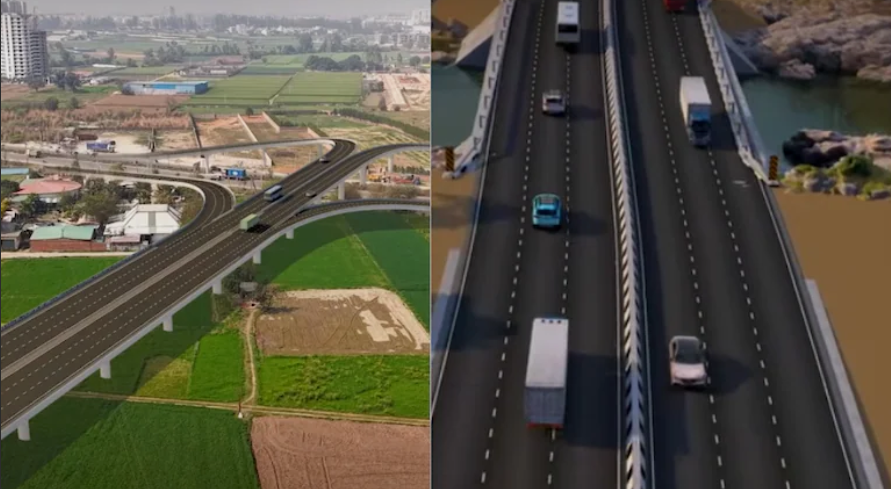
The upcoming 30-km Ambala–Mohali expressway is expected to reduce congestion around Zirakpur and Dera Bassi, improving road connectivity between Delhi, Chandigarh, Punjab and Himachal Pradesh.
Road travel between Delhi and Chandigarh could soon become faster and more convenient, with a new section of the Ambala–Chandigarh Greenfield Expressway scheduled to open on December 15, 2026.
The upcoming six-lane corridor will connect the Ambala side with IT City Chowk in Mohali, offering motorists an alternative to the heavily congested roads around Zirakpur and Dera Bassi.
The approximately 30-kilometre stretch is expected to reduce travel time by 40–50 minutes for motorists using the new route, potentially benefiting daily commuters, business travellers and tourists heading towards Punjab and Himachal Pradesh.
New Ambala–Mohali Expressway to Bypass Major Traffic Bottlenecks
One of the primary advantages of the new expressway will be its ability to divert traffic away from busy urban stretches around Zirakpur and Dera Bassi.
These areas frequently experience congestion due to a combination of local traffic, commercial vehicles and long-distance travellers moving between Haryana, Punjab and Chandigarh.
The new six-lane corridor is designed to provide an alternative route, allowing motorists to avoid some of these traffic-heavy sections.
Once operational, the expressway is expected to improve traffic movement around the Chandigarh Tricity region while offering more convenient connections for vehicles travelling from Delhi.
Expressway to Connect With Mohali–Kurali Corridor
The Ambala–Mohali section will connect with the approximately 31-kilometre Mohali IT City–Kurali Greenfield Expressway, which is already operational.
Together, these corridors are expected to create a more efficient road connection between Haryana and Punjab.
The improved network will allow motorists to continue towards Rupnagar and Kiratpur, which serve as important gateways for journeys towards several destinations in Himachal Pradesh.
The integration of the two expressways is also expected to provide additional route choices for travellers who currently depend on congested roads around Chandigarh and Mohali.
Faster Road Trips Towards Shimla and Manali
The benefits of the new expressway could extend beyond the Delhi–Chandigarh route.
Travellers planning road trips to popular destinations such as Shimla and Manali may find the corridor useful for avoiding traffic around the Tricity region.
Motorists travelling from Delhi can reach Ambala and continue towards Mohali, Kurali, Rupnagar and Kiratpur, depending on their destination and preferred route.
For tourists heading towards Himachal Pradesh, reducing delays around congested urban roads could make long-distance journeys more comfortable.
However, the actual time saved will depend on traffic conditions, the selected route and road conditions beyond the new expressway.
Better Connectivity Towards Punjab and Jammu
The upcoming corridor is also expected to support travel towards several destinations in Punjab.
From the Rupnagar region, motorists can access routes leading towards Amritsar and Jalandhar.
The wider highway network also offers onward connections towards Jammu and Srinagar through Pathankot.
For travellers undertaking multi-city journeys across northern India, improved road connectivity around Chandigarh could provide greater flexibility in planning routes.
The new section is therefore expected to benefit not only Delhi–Chandigarh commuters but also motorists travelling across Haryana, Punjab and neighbouring states.
Improved Access to Mohali International Airport
Another potential benefit of the expressway is improved connectivity towards the Mohali International Airport area.
Passengers travelling to and from the airport may gain an additional route option that avoids some of the congestion around Zirakpur and surrounding roads.
This could be particularly useful for travellers arriving from Haryana or other parts of Punjab.
However, airport-bound travel times will continue to depend on the location of entry and exit points, local road conditions and traffic near the airport.
Part of a Larger Highway Development Network
The Ambala–Mohali expressway forms part of wider efforts to strengthen highway connectivity across northern India.
Another project, the Ambala–Shamli Expressway, is under construction and is expected to improve connections between Haryana and Uttar Pradesh.
Together with other highway developments, these projects aim to improve regional mobility and reduce dependence on congested urban routes.
The improved infrastructure could also support tourism, trade and business travel by making intercity journeys more efficient.
Delhi–Chandigarh Expressway: Key Details
Expected opening
15 Dec 2026
Estimated time saving
40–50 min
New corridor length
30 km
Road configuration
6 lanes
Route: Ambala side to IT City Chowk, Mohali
Connecting corridor: Mohali IT City–Kurali Greenfield Expressway (approximately 31 km)
Major benefit: Bypassing congested roads around Zirakpur and Dera Bassi
What the New Expressway Means for Travellers
The upcoming Ambala–Mohali expressway could make road travel across northern India more convenient by reducing delays around one of the region’s busiest transport corridors.
For Delhi–Chandigarh commuters, the expected reduction in travel time may offer a welcome improvement.
For tourists travelling towards Punjab and Himachal Pradesh, the corridor could provide an alternative route for weekend getaways and longer road trips.
With the opening currently scheduled for December 15, 2026, the project represents another step towards improving road connectivity across Haryana, Punjab and the wider northern region.