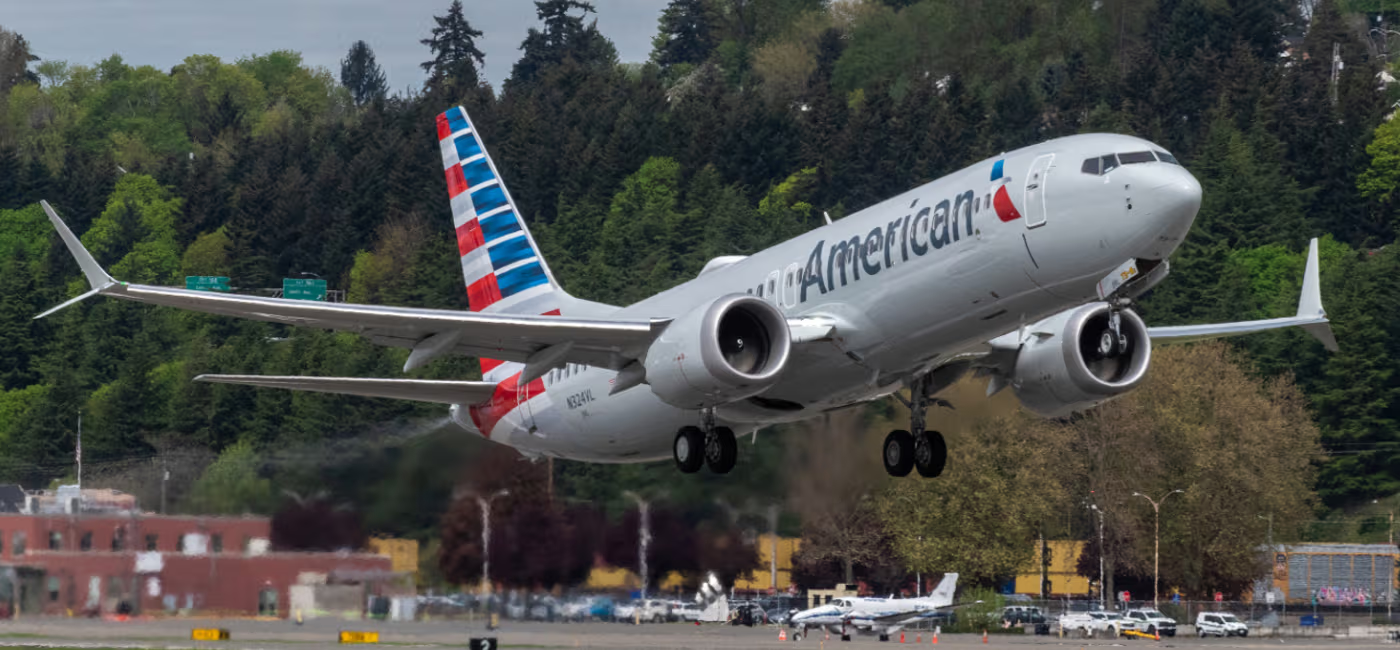
Boeing and American Airlines have completed the first landing gear exchange for a Boeing 737 MAX, marking a new milestone in the aircraft manufacturer’s maintenance support programme for the popular narrowbody aircraft family.
The achievement comes as Boeing expands its established Landing Gear Exchange Program to the 737 MAX. Under the programme, airlines can receive fully overhauled Boeing-certified main and nose landing gear assemblies that are ready for installation.
The approach is designed to reduce the amount of time an aircraft remains on the ground while also helping airlines manage spare-parts requirements and maintenance costs.
Boeing Expands Maintenance Support for 737 MAX
The extension of the programme gives 737 MAX operators another option when replacing landing gear assemblies during maintenance.
According to Boeing, the company is working to increase its global overhaul capacity and coordinate with certified maintenance, repair and overhaul (MRO) partners. The aim is to make the exchange service available in more locations while reducing lead times for airlines.
For carriers operating large 737 MAX fleets, faster access to replacement components can be particularly important when aircraft downtime directly affects fleet availability.
Focus on Faster Turnaround and Cost Management
Boeing’s next phase of the programme will focus on expanding its inventory of 737 MAX-compatible landing gear, creating more forward-exchange slots closer to airline operations and monitoring operational data.
The company also plans to track downtime and cost-related metrics as the programme grows, providing airlines with a clearer picture of the benefits of the exchange model.
William Ampofo, senior vice president of Parts & Distribution and Supply Chain at Boeing Global Services, said the milestone demonstrates the value of the company’s landing gear exchange capability in providing predictable and cost-effective maintenance support.
The move represents another step in Boeing’s efforts to strengthen aftermarket services for the 737 MAX and help operators keep aircraft in service while managing maintenance requirements.